The benefits of fasting in Ramadan go far beyond staying hungry. For Muslims living in the United States, Ramadan is not only a religious event. It is a full Ramadan transformation journey that changes the heart, body, and mind. It teaches why Muslims fast, highlights the importance of Ramadan, and builds strong faith in daily American life.
During Ramadan fasting, Muslims practice fasting from dawn to sunset in the blessed Islamic fasting month. This sacred time focuses on spiritual purification, discipline, and kindness. The experience shapes your habits, mindset, and relationship with Allah. Let us explore the deep benefits of fasting in Ramadan in a simple and clear way.
Spiritual Growth and Closer Connection to Islam
The benefits of fasting in Ramadan begin with powerful spiritual renewal. During Ramadan fasting, you increase Islamic worship, daily Quran recitation, and sincere prayer. This builds taqwa development and strengthens your faith. You begin to understand the true meaning of Ramadan spiritual benefits and fasting and spiritual growth in everyday life.
In the busy American lifestyle, Ramadan creates space for reflection. You slow down. You focus on Ramadan reflection, Ramadan faith strengthening, and seeking Ramadan forgiveness. This leads to deep Islamic spirituality and real fasting and spiritual awakening. The result is calmness and stronger belief.
Strengthens Self-Discipline and Patience
One of the strongest benefits of fasting in Ramadan is learning control. You practice self-control in Islam by avoiding food and bad habits. This daily self-discipline training shows clearly how fasting improves discipline and builds lasting habits.
Through hunger and thirst, you develop patience in Ramadan. You learn fasting and patience in traffic, at work, and at school. Over time, these lessons become part of your character. This is the power of Ramadan and self-control and the real meaning of the benefits of fasting discipline.
Encourages Gratitude and Contentment
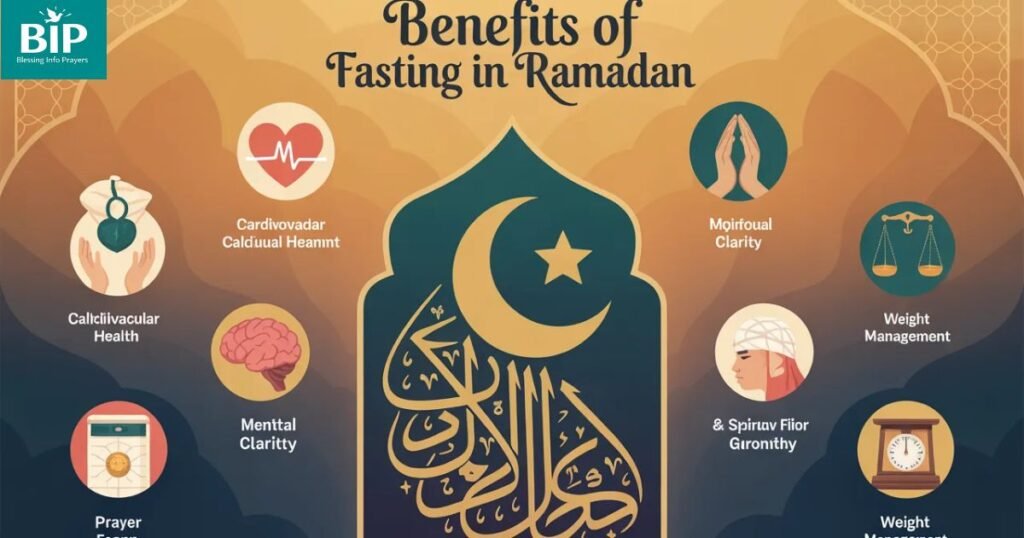
The benefits of fasting in Ramadan include deep gratitude in Islam. When you wait all day for Iftar time, even water feels special. This simple act strengthens Ramadan and gratitude in your heart.
Living in a country of comfort, Ramadan reminds you not to waste. It teaches contentment and humility. You value small blessings. This mindset supports long-term happiness and real Ramadan blessings for Muslims.
Promotes Charity and Generosity
Ramadan increases Zakat charity and Sadaqah giving. The benefits of fasting in Ramadan include caring more for others. You understand hunger. You grow in kindness. This supports strong Ramadan and charity values.
In the United States, many Muslims support food banks and shelters during charity in Ramadan. This builds strong Ramadan community spirit and unity within the Muslim community. It reflects the beauty of Islamic values in action.
Improves Mental Clarity
Another important part of the benefits of fasting in Ramadan is focus. Many people experience strong mental clarity fasting brings. Less eating means fewer distractions. You think clearly. You act mindfully.
Research in fasting and health science suggests fasting may support fasting and brain health. People report better attention and stronger memory. These are clear mental benefits of fasting and part of Ramadan mindfulness.
Supports Detoxification of the Body
The body rests during Ramadan fasting. The digestive system slows down. This may support detox during fasting and natural repair. Many experts speak about Ramadan detox benefits and improved digestion.
Below is a simple table showing common physical changes during fasting.
| Physical Change | Possible Benefit |
| Rested digestion | Better gut balance |
| Lower calorie intake | Support for fasting and metabolism |
| Controlled eating window | Possible fasting and weight loss |
These are key physical benefits of fasting and part of the broader benefits of fasting in Ramadan for health.
Aids in Weight Management
Many Muslims notice better control over eating habits. Weight management Ramadan becomes easier when meals are planned. Limiting snacks helps reduce overeating.
Balanced Suhoor meal choices and moderate portions at Iftar time are essential. Healthy proteins, fruits, and water support fasting health benefits. These habits encourage safe and mindful living.
Enhances Emotional Stability
The benefits of fasting in Ramadan also include emotional strength. You learn emotional control Islam teaches. You pause before reacting. This builds maturity.
Practicing restraint improves fasting and emotional balance. You reduce anger and stress. These are strong emotional benefits of fasting and part of lasting self-growth.
Strengthens Family Bonds
Ramadan encourages togetherness. Daily meals create strong Ramadan family bonding moments. Families pray, eat, and reflect together.
This shared Ramadan lifestyle builds trust and love. It strengthens Muslim unity at home. These connections often continue long after Ramadan ends.
Builds Community Spirit
Mosques in the United States fill during Taraweeh prayer. The sense of belonging is powerful. This is the heart of the Muslim community.
Collective worship increases Ramadan worship benefits and brings shared joy. These gatherings show the beauty of Ramadan rewards and unity.
Teaches Time Management
Fasting requires planning. You organize work, prayer, and meals. This improves Ramadan time management and discipline.
A simple daily example of a Ramadan daily routine is shown below.
| Time | Activity |
| Before dawn | Suhoor meal and prayer |
| Work hours | Job and quiet reflection |
| Sunset | Iftar time and family |
| Night | Taraweeh prayer |
This structure supports productivity and faith together.
How the Benefits of Fasting in Ramadan Improve Sleep Patterns
One overlooked part of the benefits of fasting in Ramadan is improved sleep awareness. Even though sleep timing changes, many people develop a more structured Ramadan daily routine. Waking for Suhoor and sleeping earlier can create discipline and better time control.
When managed correctly, this routine supports energy balance and focus. Avoiding heavy meals at night improves digestion and supports overall fasting health benefits during the Islamic fasting month.
How Fasting in Ramadan Supports Heart Health
Among the physical benefits of fasting in Ramadan, heart health is important. Studies related to fasting and health science suggest controlled fasting may help improve cholesterol levels and support healthy blood pressure.
Balanced meals and mindful eating during Ramadan can reduce processed food intake. This supports long-term wellness and highlights the broader benefits of fasting in Ramadan for health.
The Benefits of Fasting in Ramadan for Personal Goal Setting
Ramadan is a powerful month for reflection and planning. Many Muslims use this time for Ramadan reflection and personal growth. The structure of fasting builds momentum for change.
This process encourages fasting and self-improvement and strengthens motivation. The discipline learned during Ramadan often helps people achieve goals even after the month ends.
Social Media Discipline and Digital Detox in Ramadan
Another modern benefit of fasting is digital control. Many Muslims reduce screen time during Ramadan to focus on worship and family. This strengthens self-control in Islam beyond food.
Limiting distractions improves concentration and relationships. It becomes part of a healthy Ramadan lifestyle and supports emotional balance in a busy world.
Long-Term Impact of the Benefits of Fasting in Ramadan
The true power of the benefits of fasting in Ramadan appears after the month ends. Habits like patience, gratitude, and discipline continue throughout the year.
When fasting becomes a tool for character building, it supports lifelong growth. This lasting impact reflects true transformation in faith, health, and mindset.
Encourages Healthy Habits
Ramadan helps in breaking bad habits. Many quit smoking. Others reduce negative speech. This supports long-term Ramadan habit building.
The month becomes a training ground for fasting and self-improvement. These are lasting Ramadan holistic benefits.
Increases Empathy for the Less Fortunate
Hunger builds compassion. The benefits of fasting in Ramadan include strong empathy development and awareness of poverty.
Through real Ramadan empathy lessons, Muslims increase volunteering. This creates stronger local communities and social support systems.
Strengthens Moral Character
Fasting is not only about food. It teaches honesty and patience. It improves Ramadan and moral values in speech and action.
This daily effort builds strong character. It reflects true Islamic self-improvement and commitment to faith.
Brings Inner Peace and Spiritual Fulfillment
The greatest of the benefits of fasting in Ramadan is calmness. Through prayer and reflection, you find inner peace Islam promotes.
This deep fasting and inner peace stays even after Ramadan ends. It is part of Ramadan rewards and lifelong growth.
Conclusion: The Lasting Impact of the Benefits of Fasting in Ramadan
The benefits of fasting in Ramadan include spiritual strength, emotional control, and physical wellness. From fasting discipline to compassion, every lesson matters.
For Muslims in the United States, Ramadan is more than tradition. It is growth. It is healing. It is transformation. And it leaves the believer stronger in faith, healthier in body, and peaceful in heart.
FAQs
What are the benefits of fasting in Ramadan?
The benefits of fasting in Ramadan include spiritual growth, stronger self-control, better empathy, improved discipline, and possible health support like better metabolism and mental clarity.
What are the 10 benefits of fasting?
Spiritual purification, patience, gratitude, charity, self-discipline, emotional balance, community bonding, detox support, weight control, and inner peace are ten key benefits.
What are the 5 benefits of fasting?
Fasting builds faith, improves self-control, increases gratitude, supports mental clarity, and may improve overall health.
What happens to your body if you fast for Ramadan?
Your body shifts to using stored energy, digestion gets rest, insulin levels drop, and metabolism adjusts which may support fat burning and cellular repair.
Which organ is affected by fasting?
The liver plays a major role because it releases stored glucose and helps manage energy when you are not eating.
Can I brush my teeth in Ramadan?
Yes, you can brush your teeth while fasting as long as you do not swallow water or toothpaste.
Can I shower during Ramadan?
Yes, showering is allowed during fasting and does not break the fast.
What is forbidden during fasting?
Eating, drinking, smoking, and marital intimacy from dawn to sunset are forbidden during fasting.
What is the 3-3-3 rule for teeth?
It usually means brush 3 times a day, for 3 minutes, and wait 3 minutes after eating before brushing.
When a dentist says 3?
When a dentist says “3,” they often refer to gum pocket depth measurement, where 1–3 mm is generally considered healthy.

Welcome to Blessinforprayers, a platform dedicated to sharing meaningful prayers, daily inspiration, and informative content. I’m Hoorab Usman, an AI‑powered SEO and content writer with over 4 years of experience.
I help websites improve search rankings, increase organic traffic, and build a strong online presence through smart SEO strategies and high‑quality content. My mission is to make SEO, content creation, and web design simple, effective, and accessible for everyone.
Let’s grow, inspire, and achieve more—together.